Department of Bioinformatics and Medical Engineering
Dedicated to cultivating interdisciplinary talent with expertise in both biological science and medical engineering technology, integrating the two fields of bioinformatics and medical engineering, and building deep knowledge in genomics, protein analysis, medical data processing, artificial intelligence, and medical device design.
Our curriculum design emphasizes a balance of foundational science, professional skills, and hands-on experience, using an "Academics × Technology × Practice" philosophy to cultivate biomedical engineering talent with both professional expertise and an interdisciplinary perspective.
Medical Engineering and Bioinformatics
The Department integrates the two fields of medical engineering and bioinformatics to cultivate cross-disciplinary application skills.
The Rise of Interdisciplinary Science
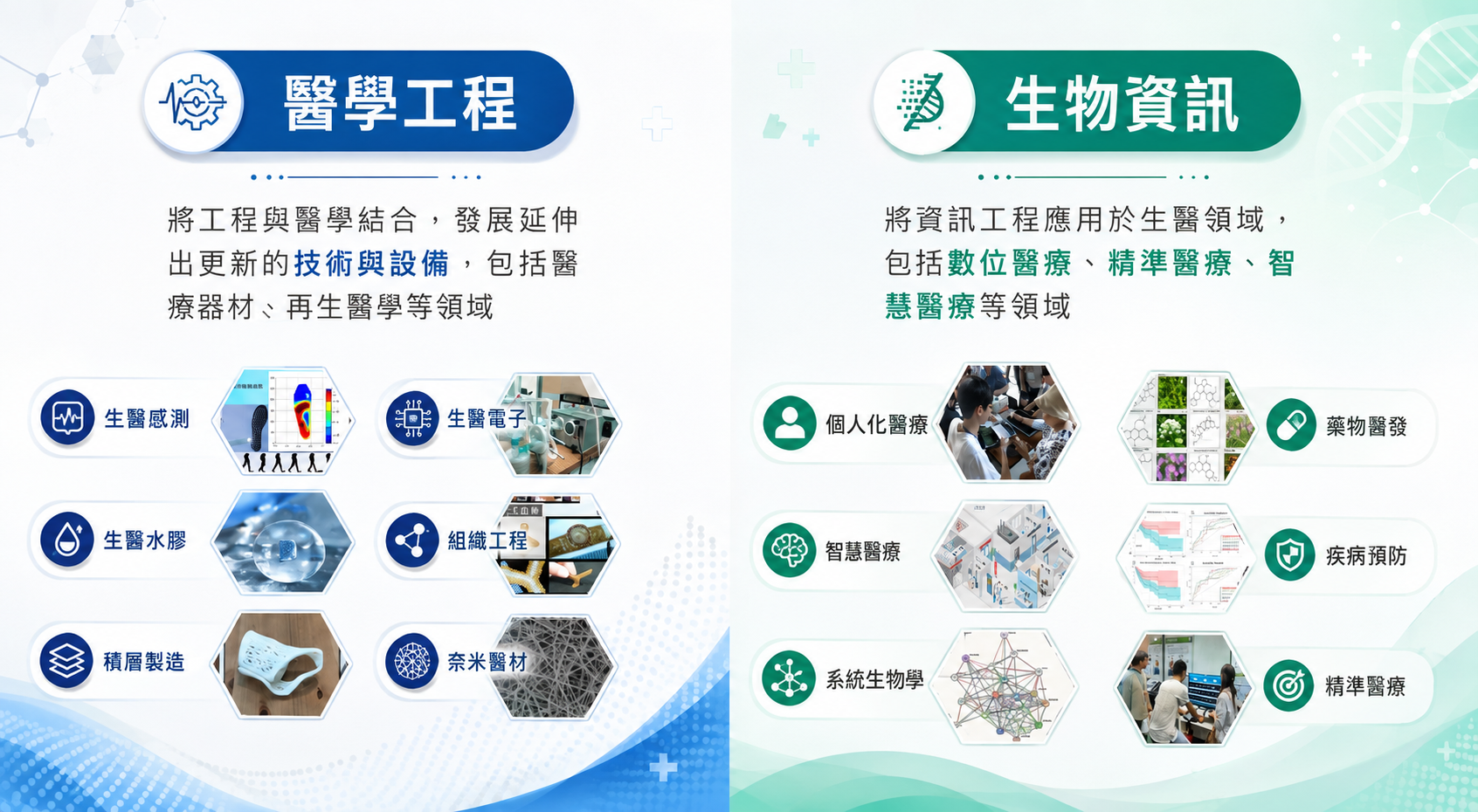
Bioinformatics and Medical Engineering is an interdisciplinary science built on three core dimensions:
Bioinformatics
Combines biology, information science, and artificial intelligence, using data analysis, programming, and data science to interpret genetic, protein, and biomedical data.
Biomedical Engineering
Combines engineering technology with medical needs, covering biomedical materials, medical devices, medical imaging, biomedical electronics, and tissue engineering, applying engineering techniques to disease diagnosis, treatment, and healthcare.
Interdisciplinary Integration & Innovation
Integrates expertise across biology, medicine, engineering, information science, and artificial intelligence, training students to start from clinical needs, analyze problems, develop technology, and pursue innovative practice — turning research results into real-world medical and health applications.
Department History
From the Graduate Institute of Bioinformatics to today's Department of Bioinformatics and Medical Engineering, we continuously adapt our teaching and research directions in response to biomedical technology and industrial trends.
Founding president Prof. Tsai Chin-Fa applied to establish the Graduate Institute of Bioinformatics at the university's founding, admitting its first students in Academic Year 2002 (91) — the first such institute in Taiwan. An undergraduate program and an executive master's program followed in Academic Year 2003 (92).
Approved to establish a doctoral program, becoming the only department in Taiwan's bioinformatics field with a complete academic ladder from bachelor's to doctoral level. In response to trends in medical data research and healthcare systems management, the department was formally renamed the "Department of Biological and Medical Informatics" in Academic Year 2010 (99).
In 2014, on the recommendation of the IEET advisory committee, the department adjusted its direction toward medical engineering in response to the growing needs of personal mobile devices and cloud applications. Starting in Academic Year 2015 (104), it was formally renamed the "Department of Bioinformatics and Medical Engineering."
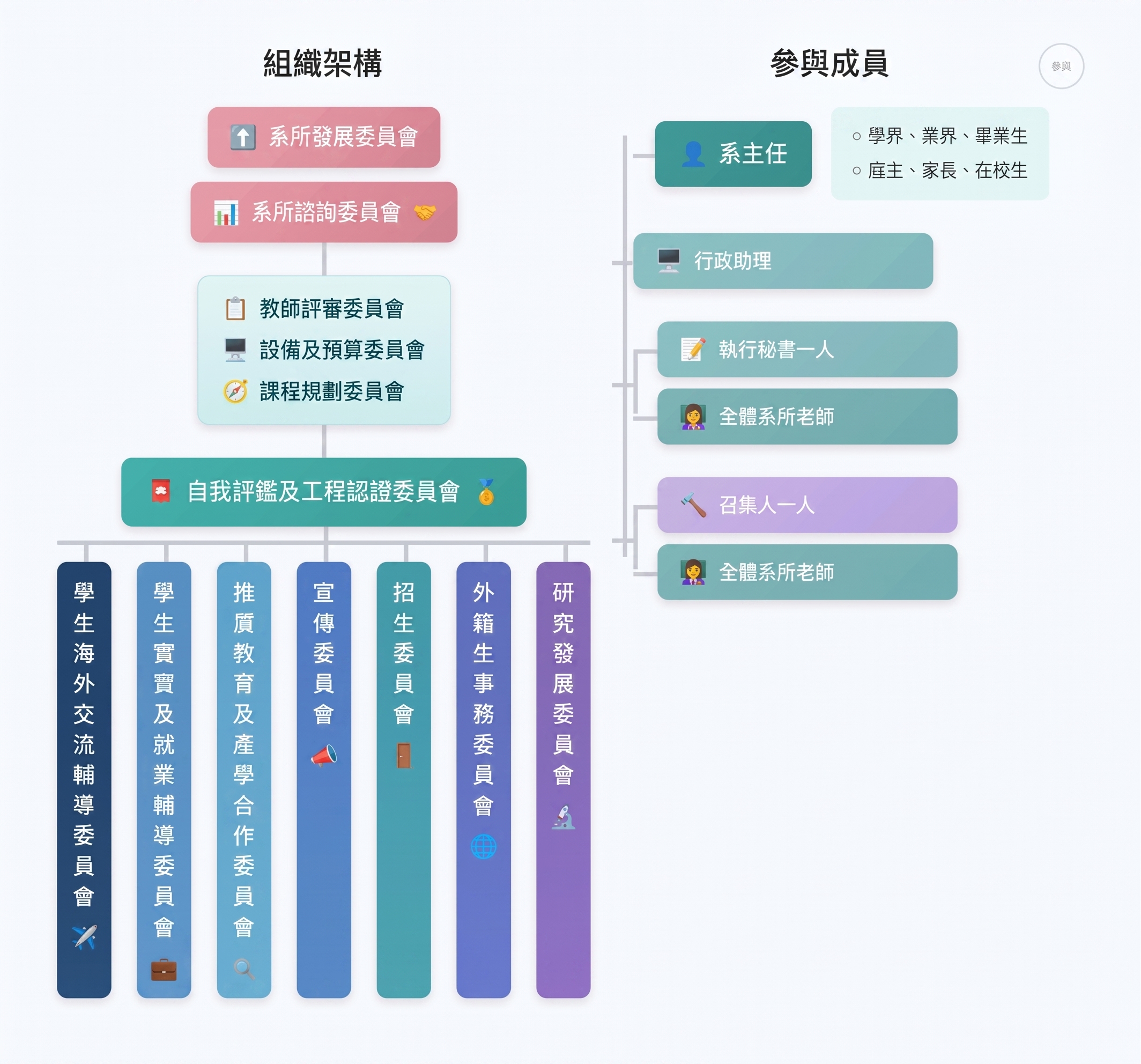
Organizational Structure and Members
Combining faculty, administrative, and research resources to establish a complete teaching and research organization.
Vision for Development
Bioinformatics and medical engineering are the Department's core areas of development. Drawing on the resources of the University's College of Computing and Communication Sciences, we cultivate talent in medical image analysis, biomedical signal processing, and medical electronic device development.
The 21st century calls for interdisciplinary collaboration. The Department aims to cultivate cross-disciplinary talent capable of applying information technology to life sciences, medical R&D, and healthcare systems management, creating a multiplier effect in the workplace.

.png)